2026-11-26 ·
Scratching Noises in Your Attic at Night: Signs of Roof Rats in Florida
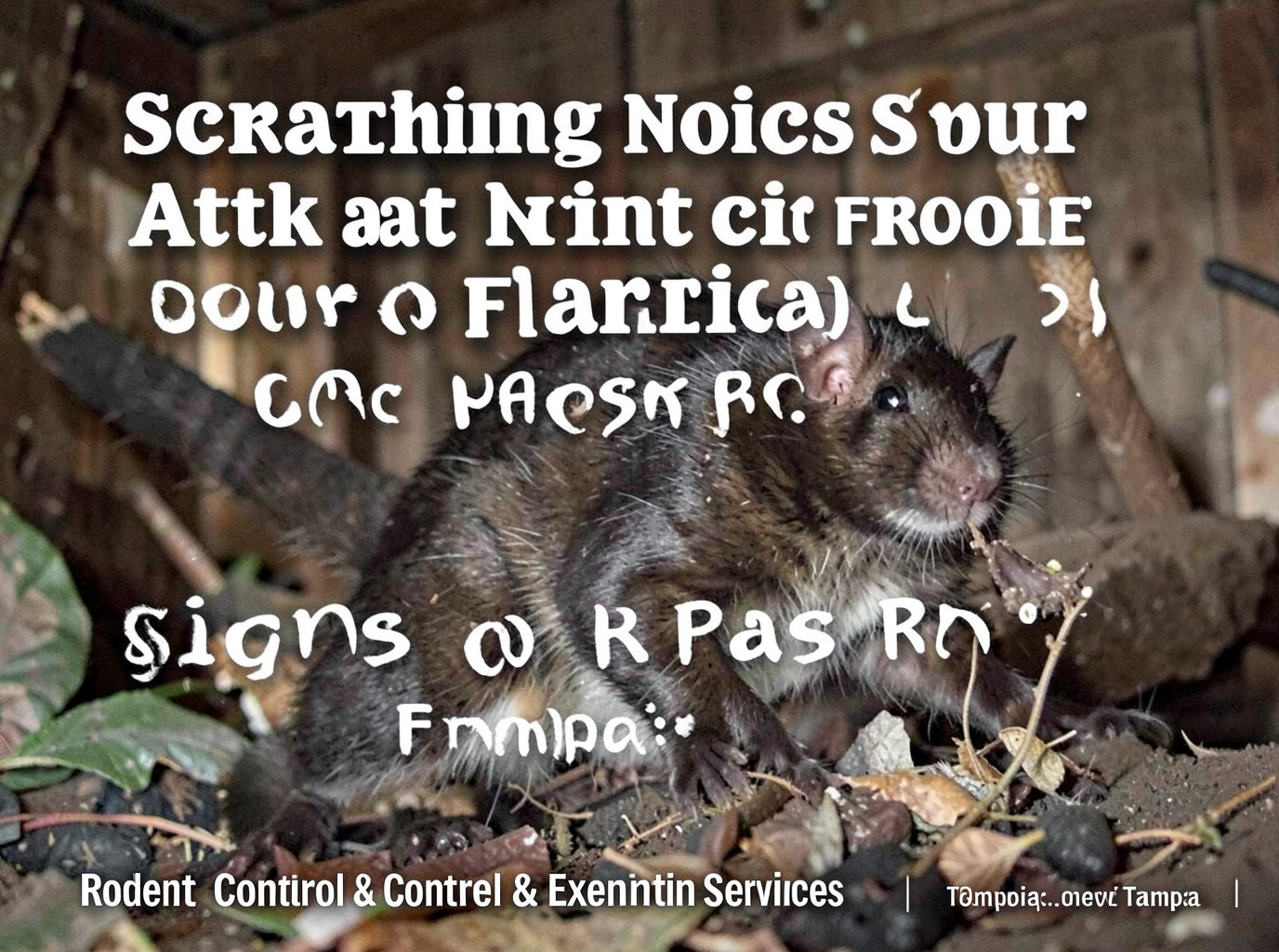
Hearing scratching noises in your attic at night in Tampa almost always means roof rats have entered through gaps as small as 1/4 inch. These rodents climb palm trees touching rooflines in neighborhoods like Hyde Park, Seminole Heights, and Davis Islands, then slip into soffits and stucco cracks common in local construction. Roof rats stay active after dark and reproduce quickly in Hillsborough County’s humid subtropical climate with its wet summers that push them indoors for shelter.
Why Roof Rats Target Tampa Attics
Tampa’s palm trees and dense vegetation create natural ladders that let roof rats reach rooflines without touching the ground. Once there, they chew entry points around vents, fascia boards, and attic access panels in homes across Ybor City Historic District, South Tampa, and West Tampa. The region’s wet summers increase moisture in attics, making insulation and stored items attractive nesting material. Roof rats also follow power lines between neighboring houses in Downtown Tampa and along the Tampa Riverwalk area, spreading infestations block by block.
Signs Beyond Nighttime Scratching
Look for dark, capsule-shaped droppings about 1/2 inch long near insulation or stored boxes. You may also notice gnaw marks on electrical wiring, which creates a real fire hazard, or shredded insulation pulled into nests. In severe cases homeowners find oily rub marks along rafters where rats travel repeatedly. These signs appear faster in older homes with original soffits in Hyde Park and Seminole Heights because gaps already exist from years of expansion and contraction in the humid climate.
Store-bought traps and spray foam fail because roof rats simply chew new holes around foam and avoid bait stations placed on the ground. Professional exclusion seals every 1/4-inch opening with metal mesh and metal flashing that rodents cannot chew through. Roof Rat Removal focuses on these permanent barriers rather than repeated trapping.
Real Risks to Your Home and Family
Roof rats chew through attic wiring in 3–6 weeks once established, raising the chance of electrical shorts. Their urine and droppings contaminate insulation, which then requires full removal and replacement at costs ranging from $1,200–$2,800 in a typical Tampa two-story home. In addition, the rodents carry fleas and mites that can move into living spaces below. Homes near Lowry Park Zoo and Busch Gardens see higher pressure because green corridors connect to nearby properties.
If you hear scratching or find droppings, call now for a fast, same-day inspection and permanent rodent exclusion. Delaying allows another litter cycle that can double the population inside 30 days.
How Exclusion Stops the Problem Permanently
Technicians begin with a full inspection of rooflines, soffits, and any palm fronds touching the structure. They install 1/4-inch hardware cloth and heavy-gauge flashing at every entry point, then trim vegetation that serves as a bridge. This approach works better than repeated trapping because it removes the access roof rats need in Florida’s year-round warm weather. How to Get Rid of Rats in Your Attic Permanently (Exclusion vs. Traps) explains why sealing beats ongoing baiting in Hillsborough County homes.
Homeowners in Brandon and nearby St. Petersburg often notice results within two weeks after exclusion because new rats cannot re-enter. Follow-up visits confirm no fresh activity before the job is complete.